Starting
The towering difficulty regarding newfangled machines asks for a deep grasp of diagnostic platforms, especially concerning On-Board Diagnostics II (OBD2) and Tire Pressure Monitoring Devices (TPMS). Throughout Europe, Asia, and the US, these features work using varying frequencies. OBD2 regulations are largely consistent globally, mainly utilizing ISO 9141-50, KWP2000, CAN, and others, but regional applications can present minor differences. TPMS, however, is where major frequency fluctuations come up. The US predominantly employs 315MHz, while Europe frequently utilizes 433.92MHz, and Asia displays a more varied range including both frequencies and extra bands. Hence, precise diagnostic tools must be prepared with the aptitude to translate these diverse frequencies to allow effective diagnosis and maintenance.
Revealing TPMS Sensor Frequencies: A Global Guide (Europe, North America, Asia)
Fathoming tire observing device (TPMS) probe channels over the planet can be tough. Commonly, North states predominantly utilize 315 MHz, even though some fresh vehicles have 433 MHz. In contrast, Europe and most of Asia largely run on the 433 MHz frequency, with some country-specific variations occurring particularly in particular Asian lands. This is, paramount to authenticate the correct channel in advance of buying into TPMS gauges to guarantee conformity and evade potential difficulties.
Battery-Powered Vehicle Readers: OBD2 Compatibility and TPMS Integration
Latest battery-operated automobile scanners are increasingly embracing essential functionality, specifically concerning both conventional On-Board Diagnostics II (OBD2) support and Tire Pressure Monitoring System (TPMS) combination. Numerous non-gasoline cars utilize OBD2 ports for fetching vital system details, letting technicians and users to locate possible failures. Furthermore, smooth TPMS unification provides reliable tire stress values, supporting to strengthened security and combustion saving. This blend of OBD2 linkage and TPMS applicability shows a noteworthy enhancement in EV motor vehicle evaluation.
Tire Monitoring Frequency Discrepancies: Western Europe vs. USA vs. Asia - A Comprehensive Review
Several systems responsible for tracking tire load—TPMS—operate on different radio waves, leading to essential regional differences. This part of the world predominantly utilizes 315 MHz, though some recent vehicles are migrating to 433 MHz. European Region mandates 433.92 MHz, a fixed frequency to ensure interoperability across nations. Asia-Pacific exhibits a intricate landscape, with selected states using 315 MHz, others 433 MHz, and still diverse zones employing a mix of both. This inconsistency poses challenges for service centers and operators when dealing with replacement TPMS devices or diagnostic apparatus, calling for careful validation of regional standards to preclude malfunctions and promote proper performance of the TPMS.
OBD2 Scanners for Battery-Powered Autos: Tire Info Examination & Radio Wave Understanding
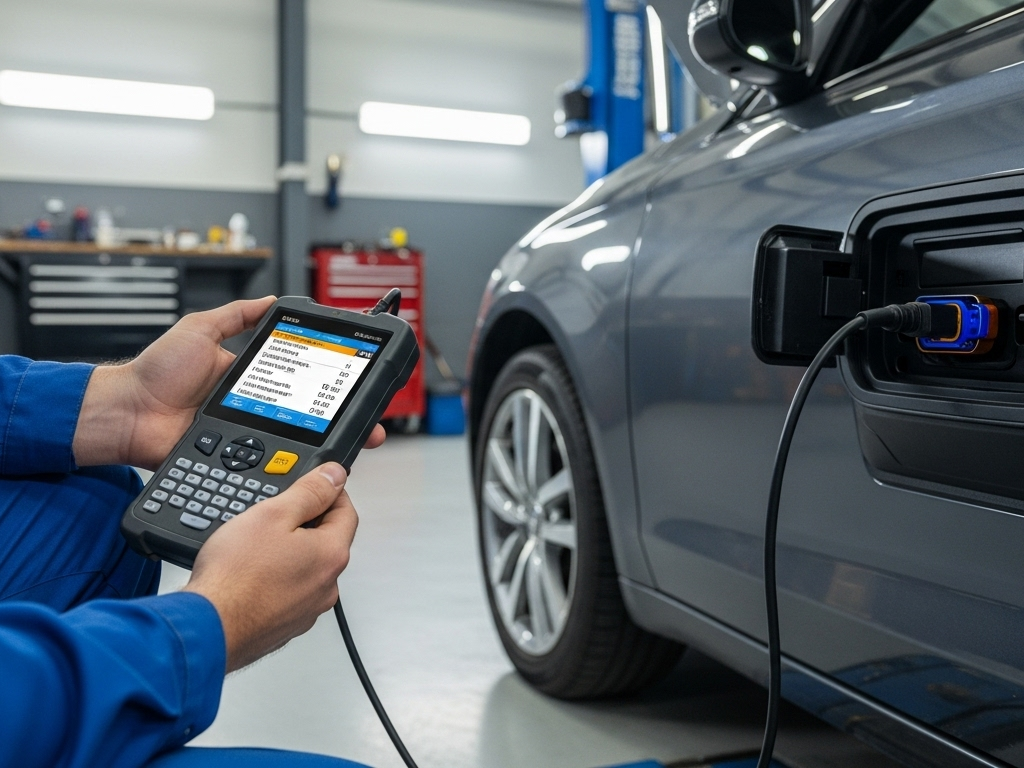
Today's auto tools are rapidly expanding to accept battery-operated transport units, exclusively involving tire surveillance evaluation. Unlike fuel-powered autos, battery cars present specific problems when it comes to TPMS examination. Many electrified automobiles use variegated tire sensor platforms radio bands requiring the detector to verifiably translate the radio wave in use. This potential grants professionals to solely display tire pressure but also discover the accurate frequency being beamed by the pressure system units, promoting in precise identification of malfunctions.
Europe Tire Monitoring Channels: Do You Should Know?
Confronting the world of vehicle TPMS can be a obstacle, primarily due to the varying channels utilized across Europe, Asia, and the United States. Continental European vehicles predominantly use 433.92 MHz, while numerous Asian countries employ 315 MHz and 433.92 MHz, creating a complex situation for mechanics. In the US, both 315 MHz and 433.92 MHz are prevalent, with 315 MHz being more extensive. Consequently, understanding these regional divergences is critical for accurately managing TPMS malfunctions and selecting the fitting programming tools.
Past that Fundamentals: Transport Diagnostics, EV Rides, and Tire Sensor Network Transmitter Signal Deciphering
As professional ride specialists, solely absorbing an key aspects involving on-board diagnostics, electronically driven machine architecture, together with pressure monitoring systems unit broadcast detecting represents an critical developed step. Such fields penetrate about basic diagnostics, demanding customized gear in conjunction with expertise for exactly determine combined with solve complex problems involving rubber systems, charge network capability, combined with internal combustion diagnostic codes. Moreover, precisely recognizing pressure sensor unit transmissions – often change for specific brands even trim levels – can be critical for optimal setting.
Electric Vehicle Diagnostics: Using OBD2 Scanners to Troubleshoot TPMS
Resolving Tire Pressure Monitoring Systems pressure detection tools in electric vehicles zero-emission cars often entails more than solely visual inspection. Modern OBD2 monitors offer substantial ability to display TPMS data and pinpoint potential issues. Utilizing these hardware, technicians can analyze fault codes, test sensor state, and even perform sensor verifications, allowing for robust diagnosis of monitoring abnormalities and minimizing outage periods. Such is especially critical given the expanding complexity of EV technology.
Navigating Tire Pressure Monitoring Systems Bands: A User's Tutorial for European Region, the East, and North America
Skillfully managing tire sensors all through Eurozone, the East, and The Americas needs a complete mastery of the diverse radio frequencies they operate on. Separate from a even system, the world generally maintains specific bandwidths. To illustrate the EU essentially uses 315 MHz range and four-three-three point nine two MHz, while the US & Canada regularly utilizes three hundred fifteen MHz although some current cars have the potential to include 433 MHz frequency range. the Asian Region demonstrates a more complex picture, with many bandwidths practiced, guided by the tpms sensor frequency europe north america region and automotive company.
- Deliberate on area rules regarding signal transmission.
- Consult your user guide for detailed frequency.
- Implement a tire pressure tool equipped for understanding varied broadcasts.